
AI Art vs Commissioned Art: Why Custom Does Not Have to Cost $500
TL;DR: Commissioned art and AI-generated art serve different purposes. Commissioned art gives you a one-of-a-kind piece with human intent and a story behind it, for $200-2000+. AI art gives you unique, attractive wall art in seconds for $15-70 printed on canvas. The smart approach for most people: invest in one or two commissioned pieces for spaces that matter most, and use AI art for everything else. They are not competitors — they fill different needs at different price points.
If you want custom wall art in 2026, you have more options than at any point in human history. At one end of the spectrum: commissioning a human artist to create a one-of-a-kind piece tailored to your exact vision. At the other: generating AI art from a text prompt in under a minute. Both approaches produce something unique. Both can look stunning on a wall. But they are fundamentally different experiences with different costs, timelines, and emotional value.
This is not a “which is better” article. That framing is reductive and usually dishonest. This is a practical guide to when each option makes sense, written by a team that obviously has a stake in AI art (we sell it) but also genuinely respects the craft of human artistry.
What do you want on your wall?
Type it. The AI generates it in seconds — then we print it on canvas from $15 or a 4×6 ft tapestry for $39.
Free to try, no sign-up · you only pay if you order a print
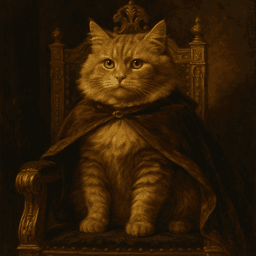
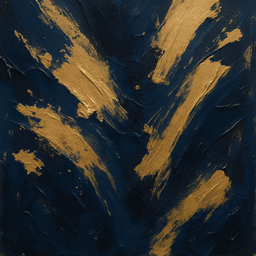


Generated, printed & in the shop
Commissioned Art: What You Actually Get
The Product
When you commission an artist, you are not just buying an image. You are buying a collaboration. You describe what you want, the artist interprets it through their unique lens, you review sketches, you give feedback, they refine. The final piece carries the artist’s personal style, their technical skill, and their creative choices. It is art that was made for you by another human who brought their own experience and perspective to it. That is genuinely meaningful in a way that no technology can replicate.
A good commissioned piece is also a conversation starter. When someone asks about it, you get to say “I commissioned this from an artist in Portland who specializes in Pacific Northwest landscapes” — and that story, that human connection, adds to the experience of owning the piece. This matters, and anyone who dismisses it does not understand why people collect art.
The Cost Reality
Here is where the conversation gets uncomfortable. Commissioned art is expensive because it should be. Artists deserve fair compensation for their time, skill, and creative labor. But fair pricing puts custom art out of reach for most people in most situations:
- Digital artists on Fiverr/Upwork: $200-500 for a detailed digital piece. Quality varies enormously. At the lower end, you may get something that took an hour; at the higher end, you get genuine craft.
- Established independent artists: $500-2,000+. This is where quality gets consistently high. These artists have portfolios, distinctive styles, and waitlists. You are paying for proven talent.
- Gallery-represented artists: $2,000-10,000+. Custom commissions at this level are significant investments. The art is exceptional, the artist is building a body of work, and you are a patron in the traditional sense.
None of these prices are unreasonable. A skilled artist spending 20 hours on a custom piece at $50/hour is $1,000 — and $50/hour is modest for specialized creative work. The economics are what they are. The question is not whether commissioned art is “too expensive” (it is not), but whether you can afford it for every wall in your home (you probably cannot).
The Timeline
Expect 1-6 weeks from initial contact to final delivery, depending on the artist’s availability, the complexity of the piece, and how many revision rounds you go through. Popular artists often have waitlists of several weeks before they even start. If you need art for a specific event or move-in date, plan accordingly. This is not a next-day Amazon purchase — it is a process, and the process is part of the value.
When Commissioned Art Is Worth Every Dollar
Some pieces deserve a human hand. Sentimental art: a portrait of your family, your wedding venue, your childhood home, a beloved pet who has passed. No AI prompt will capture the emotional weight that a skilled human artist brings to a piece with personal meaning. A master’s style: if there is an artist whose work you love — their specific color palette, their brushwork, their perspective — there is no substitute for their actual hand. Supporting artists you admire: buying art is a form of patronage, and it matters. The centerpiece: the one piece that anchors your living room, that visitors notice first, that you will own for decades. That piece should have weight, history, and intention behind it.
AI Art: What You Actually Get
The Product
An AI-generated image is a unique visual created from a text description. No two generations are identical, even from the same prompt. The image is yours — you own it, you can print it, hang it, sell it (with some legal nuances around copyright). But it was not “created” in the way a human creates art. There was no artistic intent, no creative struggle, no personal interpretation. It is a sophisticated visual output from a statistical model. It can be beautiful. It can be exactly what you want on your wall. But it does not have a story in the way commissioned art does.
What AI art does offer is iteration at zero marginal cost. If you do not love the result, you generate another one. And another. You can experiment with styles, colors, compositions, and moods without any financial or social consequence. There is no awkward conversation with an artist about why you do not like their work. There is no sunk cost after three revision rounds. You just try again until something clicks. For people who are not exactly sure what they want, this exploratory process is genuinely valuable.
The Cost Reality
The numbers speak for themselves. On Art-ificial, generating an image costs about $0.12 (at $2.99 for 25 credits). You get 10 free credits when you sign up. Once you have an image you love, printing it is straightforward:
- 8×8” canvas: $15
- 16×16” canvas: $35
- 24×24” canvas: $70
- 4×6 ft tapestry: $39
So the total cost for a unique piece of wall art, from idea to hanging on your wall, ranges from about $15 to $70. Compare that to $200 at the absolute lowest end for commissioned work. The cost gap is not marginal — it is an order of magnitude.
The Timeline
Generation: seconds. Literally. You type a prompt, wait a few seconds, and have an image. If you do not like it, you type another prompt. The entire creative process — from “I want something for that empty wall” to “this is perfect” — can happen in a single sitting. Print production and shipping adds a few business days. From idea to hanging, you are looking at about a week total, with most of that being shipping time.
When AI Art Is the Right Choice
Decorating multiple rooms or walls. This is where the cost math gets dramatic. Filling five walls with commissioned art at $500 each is $2,500. Filling five walls with AI art is $75-350 depending on sizes. That is not a small difference — it is the difference between decorated and not decorated for most budgets.
Experimenting before committing. Not sure if you want abstract or landscape? Warm tones or cool? Bold or minimal? AI lets you see all of these options in minutes, for free (with your signup credits). Try prompting different styles before you invest in a commissioned piece for the main wall. Our prompting guide can help you explore styles effectively.
Temporary spaces. Dorm rooms, short-term rentals, first apartments, kids’ rooms that will change taste in two years. These spaces deserve to look good, but investing $500+ per piece does not make sense when you will likely want something different in 18 months. Read our dorm room wall art guide for more on decorating temporary spaces.
Matching specific aesthetics. Need wall art that matches your sage green accent wall and mid-century furniture? Good luck finding a commissioned artist available for under $300 who can deliver that in time for your dinner party. With AI, you describe exactly what you want, including color palette, style, and mood, and generate options in minutes.
The Honest Comparison
Quality: Both Can Look Stunning
Let’s put the snobbery aside for a moment. A well-generated AI image, printed on quality canvas at the right size, looks great on a wall. Period. Visitors will compliment it. It will make the room better. AI art at 1024×1024 pixels prints cleanly up to 24×24” on canvas (the canvas texture actually helps at lower DPIs, giving images a painterly quality). But — and this is an important but — a skilled human artist brings nuance, emotional depth, and narrative intentionality that AI simply cannot replicate. A commissioned portrait carries life in a way an AI portrait never will. A landscape painted by someone who has stood in that valley and felt the light hits different than a landscape generated from a prompt describing it.
Uniqueness: Both Are One-of-a-Kind
Every AI generation is unique — even the same prompt produces different results each time. So in a literal sense, AI art is one-of-a-kind. But commissioned art is one-of-a-kind and crafted. There is a difference between “no one else has this exact image” and “a human artist spent 20 hours making this specifically for me.” Both are unique. One has a story. If the story matters to you (and for certain pieces, it should), commissioned art wins this dimension handily.
Cost to Fill a Home: The Practical Math
A typical home has 6-10 walls that could benefit from art. Filling all of them with commissioned pieces: $1,200-10,000+ (and that is being conservative). Filling all of them with AI art: $100-500. The realistic, smart approach that most budget-conscious people should consider: one commissioned piece for the living room ($500) plus AI art for the other walls ($200 total). Total: $700 for an entire home that feels intentionally decorated, with a genuine centerpiece. That is a strategy, not a compromise.
The “Is It Real Art?” Question
We are not going there. Seriously. That debate generates more heat than light, and it is mostly conducted by people who are not actually buying art for their walls. Here is what we will say: a piece that makes you feel something, that makes your space better, that you enjoy looking at every day — that piece is worth having on your wall regardless of how it was made. The snobbery around AI art being “not real art” is the same energy as the snobbery around photography “not being real art” in the 1800s, or digital art “not being real art” in the 2000s. The walls of your home are not a gallery exhibition. They are your space, and you get to put whatever makes you happy on them. Read more about the evolving landscape in our intro to AI art.
The Practical Recommendation
Use AI Art For
- Most of your walls. Unless you have an unlimited art budget, AI art is the practical choice for the majority of your wall space. The quality is there, the cost is right, and the convenience is unmatched.
- Experimentation. Before you invest in a commissioned piece, use AI to explore styles, color palettes, and compositions. It is free to try — sign up and get 10 free credits.
- Dorms, rentals, and first apartments. Temporary spaces deserve to look good without a permanent-art budget.
- Kids’ rooms. Their taste will change. Generate dinosaur art today, space art next year, abstract art when they are teenagers. At $15-35 per canvas, redecorating is a non-event.
- Home offices. You want something that looks professional and interesting without spending serious money on a room most people will not see. A well-chosen AI art piece on canvas does the job perfectly.
- Gift giving. A custom canvas print of AI art tailored to someone’s taste is a thoughtful, affordable gift. Much better than a generic print from Target.
Invest in Commissioned Art For
- The living room centerpiece. The one wall everyone sees. The piece that anchors the room. This is where human artistry pays for itself in emotional impact.
- Sentimental pieces. Family portraits, wedding venues, memorial art for loved ones or pets. These carry emotional weight that demands a human hand.
- A meaningful gift. Commissioning a piece for someone’s birthday, anniversary, or housewarming says “I put real thought and investment into this.”
- Supporting artists you believe in. If there is an artist whose work moves you, buying from them is a direct form of support that matters to their career.
The Hybrid Strategy
Here is what we actually recommend for someone decorating a home in 2026 on a normal budget: commission one piece from a human artist for the most important wall in your home. Budget $300-800 for this — enough to get quality work from a talented independent artist. Then use AI art for everything else. Generate pieces that complement the commissioned centerpiece — similar color palettes, compatible styles, cohesive mood. Three or four AI-generated canvas prints (starting at $15 each) plus a tapestry ($39) can fill the remaining walls for under $150. Total investment: $450-950 for an entire home that looks intentionally curated, with a genuine piece of human artistry as the anchor.
That is not a compromise. That is a strategy. And it is one that was not possible two years ago. Check out our honest comparison of AI art generators to find the right tool for your needs, and browse our home decor guide for room-by-room inspiration.
A Note on Respecting Artists
We want to be direct about something. AI image generators were trained on human-created art. The legal and ethical implications of that training process are real, unresolved, and worth caring about. We are not going to pretend otherwise. If you care about supporting human artists — and we think you should — here are concrete things you can do alongside using AI art: buy directly from independent artists when you can afford to, share and credit artists whose work you admire, support legislation that protects creative workers, and do not use AI to replicate a specific living artist’s style and pass it off as their work. AI art and human art can coexist. But that coexistence requires people who use AI art to also value and support the human artists whose work made it possible.
FAQ
Is AI art “cheating” compared to commissioning real art?
No. They are different tools for different situations, not different moral choices. Using AI art to decorate your bedroom is no more “cheating” than buying furniture from IKEA instead of hiring a carpenter. Both are valid choices at different price points. The only thing that would be genuinely wrong is claiming AI art was hand-made by a human artist, or using AI to deliberately replicate and sell a specific living artist’s style.
Can guests tell the difference between AI art and commissioned art on a wall?
Honestly? Usually not, especially on canvas. Printed on quality canvas with proper framing, AI-generated art has the same physical presence as any other printed artwork. The canvas texture adds a painterly quality that makes digital origins less obvious. Most people will notice that you have interesting art on your walls — they will not interrogate how it was made. If someone does ask, “I generated it with AI and printed it on canvas” is a perfectly normal answer in 2026 that usually sparks curiosity, not judgment.
How do I find a good artist for a commission?
Start with platforms like Etsy (search for custom art commissions in your preferred style), Instagram (follow artists and look for “commissions open” posts), or dedicated commission sites like ArtStation. Look at their portfolio for consistency — an artist who produces great work reliably is more important than one with a single amazing piece. Ask about their process, timeline, and revision policy before committing. Budget at least $200-300 for quality digital work, $500+ for traditional media. And be a good client: provide clear references, be specific about what you want, and respect their timeline.
What if I want AI art that looks like a specific style but not a specific artist?
This is a sweet spot for AI generation. Prompting for “impressionist landscape” or “minimalist geometric abstract” or “dark moody botanical illustration” is perfectly fine — these are styles, not individual signatures. Where it gets ethically questionable is prompting for “in the style of [specific living artist].” Stick to describing the aesthetic qualities you want (color palette, composition style, mood, medium) rather than naming specific creators. Our prompt guide for home decor has 50 style-focused prompts that produce beautiful results without referencing individual artists. You can also explore which print medium best suits different art styles.
Ready to Create Your Own Wall Art?
Generate one-of-a-kind artwork in seconds. Canvas prints from $15, tapestries from $39. 10 free credits when you sign up.
Start Creating — FreeKeep Reading
Best AI Art Generators Compared: An Honest 2026 Review
We run two AI models and sell prints — so we have no reason to lie about what each generator is actually good at.
How AI Art is Revolutionizing Home Decor in 2026
AI-generated wall art is no longer a novelty — it is becoming the default for people who want something original without the gallery price tag.
Canvas Prints vs Tapestry Wall Hangings: Choosing the Right Medium
Canvas for crisp detail, tapestry for big impact — here is how to decide which medium is right for your space and art style.